
Vertical Integration in Footwear
Every footwear collection starts with optimism. A sketch becomes a sample; a sample becomes a prototype, and somewhere between approval meetings and production schedules, the real challenge appears.
Every footwear collection starts with optimism. A sketch becomes a sample; a sample becomes a prototype, and somewhere between approval meetings and production schedules, the real challenge appears.
The design is ready, but the mold needs to be changed. The sole is final, but another component is still waiting. The launch date stays fixed while the production timeline keeps shifting. For brands working with a ladies' shoe manufacturer, this kind of challenge raises a more practical question: does a factory simply make shoes, or does it keep decisions moving when the product itself keeps changing?
That distinction becomes important when considering vertical integration. This guide will walk you through how vertical integration influences product development, sampling, tooling, quality control, and production continuity, and why brands increasingly evaluate manufacturing structure before they evaluate production capacity.
Where Footwear Projects Usually Slow Down
The biggest disruptions in footwear happen quietly, between stages that depend on one another more than they appear to.
Consider a brand preparing its next collection. The prototype receives positive feedback, but a slight adjustment is required to improve the silhouette. If the tooling sits with one supplier, the sole with another, and sampling somewhere else, that single revision begins travelling through multiple organisations before anyone can move forward.
Now multiply this across twenty or thirty styles.
Suddenly, delays stop being isolated incidents and become part of the development calendar itself.
That's why experienced sourcing teams increasingly evaluate manufacturing structures, not just production capacity. They know that execution is usually shaped long before production reaches full scale.
Why Connected Manufacturing Changes the Conversation
Vertical integration changes how complexity is managed. Rather than restarting coordination at each stage, manufacturers with connected capabilities allow technical teams to solve problems while development is still in motion. This shifts the conversation from "Who owns this stage" to "How quickly can this move forward"?
The practical difference looks like this:
| Traditional handoffs | Connected manufacturing |
|---|---|
| Multiple external approvals | Decisions stay within one workflow |
| Separate coordination across vendors | Development teams work more closely together |
| Longer revision cycles | Faster response to product changes |
| Information moves between suppliers | Information moves within the production ecosystem |
The value is in preserving momentum while maintaining consistency.
The Part Nobody Sees Often Matters the Most
Stitching, finishing, and final assembly are common terms used whenever the discussion of footwear manufacturing takes place. But few conversations begin with mold development.
Yet tooling quietly determines whether a design can be repeated accurately across thousands of pairs.
A mold is more than a production asset; it becomes part of product development itself. When it sits outside the manufacturing ecosystem, every revision introduces another layer of communication. When it sits closer to production, technical adjustments happen with greater continuity.
Tirubala's captive mold-making capability supports this approach by keeping tooling closely aligned with product development instead of treating it as a separate production dependency.
When Components Are Built to Work Together
A finished shoe is defined by its performance, and its performance comes from how multiple parts work together.
The outsole influences movement. The insole contributes to comfort. Construction methods affect long-term shape retention, and none of these decisions exist in isolation.
This is where integrated manufacturing becomes more valuable than simply assembling components. Rather than evaluating each component separately, manufacturers can assess how different elements interact before production scales.
At Tirubala, various production capabilities include sole manufacturing, sole molding, insole production, cutting, stitching, lasting, and finishing. These capabilities operate within the same manufacturing ecosystem, allowing different production stages to stay closely connected throughout development.
Sampling Is Where Confidence Gets Built
A prototype is not just a preview of the finished shoe. It is where assumptions are tested.
Does the construction hold its intended shape? Does the sizing remain consistent? Can the design move into production without introducing unexpected changes?
Those are the questions that really matter because the first sample rarely becomes the final product.
During sampling, manufacturers with stronger development systems typically focus on three areas:
- Faster prototype refinement
- Better alignment between design and production teams
- Earlier identification of technical adjustments
Tirubala's development process supports rapid prototyping alongside continuous style development, helping brands evaluate products before they enter larger production runs.
Control Looks Different at Scale
Large production capacity usually becomes the headline. Operational control is what keeps that capacity useful. Consider what happens during a seasonal launch. Multiple styles move through development simultaneously. Technical teams require access to material decisions. Production schedules depend on coordinated workflows instead of isolated milestones.
This is where vertical integration becomes easier to recognise.
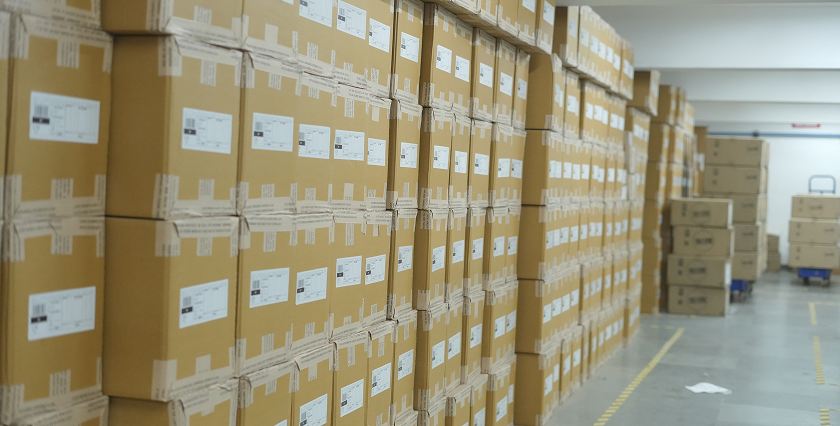
Tirubala's manufacturing ecosystem combines product development, component production, quality control, warehouse movement, and RFID-supported dispatch within a connected operational framework designed to support execution across different stages of production.
The objective is to allow production to remain coordinated as complexity increases.
Conclusion
Go back to the question this article opened with. Does a factory simply make shoes, or does it keep decisions moving when products keep changing?
The answer says a lot more about a manufacturing partner than any single production number ever could. Vertical integration is valuable, not simply because it places every capability under one roof, but because it reduces unnecessary friction between ideas and execution. When development, tooling, components, manufacturing, sampling, production, and dispatch remain connected, brands gain something that becomes increasingly difficult to find as collections grow more complex: continuity.
For businesses evaluating an Indian shoe manufacturer, that continuity is usually a strong indicator of long-term manufacturing capability. Not because production becomes easier, but because the journey from concept to completion becomes far more predictable.